
Haley School Seminar Series
Harvard scientist to focus on evolution of gene transfer
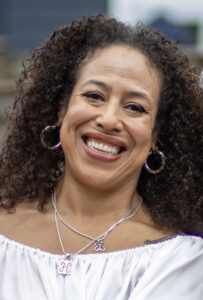
A Harvard professor, geneticist and researcher is the speaker Sept. 17 at the second Simon A. Haley School of Agriculture and Natural Sciences’ Fall Seminar Series for 2026.
Dr. Cassandra Extavour is the Timken Professor of Organismic and Evolutionary Biology and of Molecular and Cellular Biology at Harvard and a Howard Hughes Medical Institute Investigator.
Her presentation is titled “”Alien Invasion: New genes and new biology generated by sequence transfer across kingdoms of life.”
The seminar will be held at 11 a.m. in the Carver Hall Auditorium on the University of Maryland Eastern Shore campus.
Dr. Extavour’s research is focused on understanding early embryonic development, the genes that control this development, the evolutionary origins of these genes and how their functions have changed over evolutionary time.
Animals are capable of an astonishing array of complex biology that appears absent in single celled organisms. Evolving these biological properties, including physiology, development and behavior, was possible largely thanks to the emergence of new gene regulatory networks.
Where did the genes in these networks come from? Some of them were present in the single-celled eukaryotic ancestors of animals, but others appear entirely novel, with no closely related genes found in other animals.
Researchers have found evidence for a surprisingly widespread phenomenon whereby new genes are created by fusing fragments of bacterial and eukaryotic genes together, generating novel chimeric genes in the genomes of a broad range of complex organisms.
Applying developmental, biochemical and computational assays to one of these chimeric genes provided evidence that it came to occupy a new role in insect reproduction, changing the way that many insects ensure they can make eggs and sperm.
Looking closely into some animals with a surprising number of chimeric genes in their genomes revealed another striking mechanism of genetic novelty: we discovered that up to 11% of the protein-coding genes in a fungus gnat (Bradysia coprophila) were likely acquired by horizontal transfer from distantly related arthropods.
Synteny, sequence composition, structural prediction, gene expression, and phylostratigraphy data suggest that these genes were acquired early in the evolutionary history of these animals, and equip them with new physiological abilities, including withstanding high levels of DNA damage and digesting nutrients found in their ecological niche.
This work enhances our understanding of how gene transfer within and between kingdoms of life contributed to the evolution of animal complexity.
Dr. Extavour is a native of Toronto, Canada and obtained her bachelor’s degree in molecular genetics and molecular biology at the University of Toronto. She obtained her PhD at the Severo Ochoa Center for Molecular Biology at the Autonomous University of Madrid in Spain.
After postdoc work at the Institute for Molecular Biology and Biotechnology in Crete, Greece, and at the University of Cambridge, she established her independent laboratory as an assistant professor at Harvard.
Outside the lab, Dr. Extavour has been a musician and performer since the age of five, and a professional classical singer since her undergraduate days in Toronto.
The seminar host is UMES Professor Kausiksankar Das.
Biology professor to highlight innovative undergrad research experiences
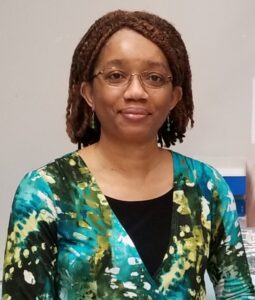
A biology professor from Elizabeth City State University in North Carolina is the speaker at the next Simon A. Haley School of Agriculture & Natural Sciences Fall Seminar Series on Oct. 1, 2026.
Dr. Margaret Young will speak on “Plant Tissue Culture and Transformation CURES at ECSU: Lessons Learned.”
The seminar will be held at 11 a.m. in the Carver Hall Auditorium on the University of Maryland Eastern Shore campus in Princess Anne.
Course-based undergraduate research experiences (CUREs) are an innovative teaching strategy recognized in increasing students’ understanding and learning complex scientific materials.
Young has deployed plant-based CUREs in biology curricula for several years. In General Botany (sophomore; pre-requisite course to Molecular Biology), students complete a CURE in plant tissue culture (producing clones of plants). In Molecular Biology (junior/senior), they attempt a CURE in plant transformation (introduction of genes). Her team has surveyed these students, and she will present their findings at the seminar.
Young is professor of biology at Elizabeth City State University since 2003. She is a senior discipline lead and the undergraduate biology coordinator in the Department of Health and Life Sciences. She currently teaches courses in general botany, molecular biology and scientific communication/capstone.
She has developed a concept of “deep learning” that relies on scientific reproducible pedagogy. Young has maintained an active research lab in plant molecular biology and has mentored more than 50 undergrad students.
Young has received several teaching awards and was the 2026 ECSU First Runner-up for Teaching Excellence from the Board of Governors, UNC System. She advocated for, established formally, and was the first director of undergraduate research at ECSU. She has had several federal and local grants (over $1.2M) to improve the teaching of plant sciences and molecular biology.
She is an active member of several organizations including the Society for In Vitro Biology (SIVB). She was recognized with the 2026 SIVB Fellow Award for outstanding contributions to the society and in vitro biology, and for mentoring undergraduates; and serves as the vice chair of the Plant Biotechnology Section.
Young is a member of the advisory board for the Halstead Branch (Elizabeth City) of the State Employees’ Credit Union; and mentors online high school biology students as part of Planting Science (Botanical Society of America).
She holds a Bachelor of Science (double major) in Botany and Chemistry, a Master of Philosophy in Botany (plant genetics) from University of the West Indies, Mona, Jamaica; and a Ph.D. in Plant and Soil Sciences from Mississippi State University. She did postdoctoral research at MSU, which resulted in three patents for plant tissue culture and transformation.
The seminar host is Dr. Vagner A. Benedito, Associate Dean for 1890 Research.
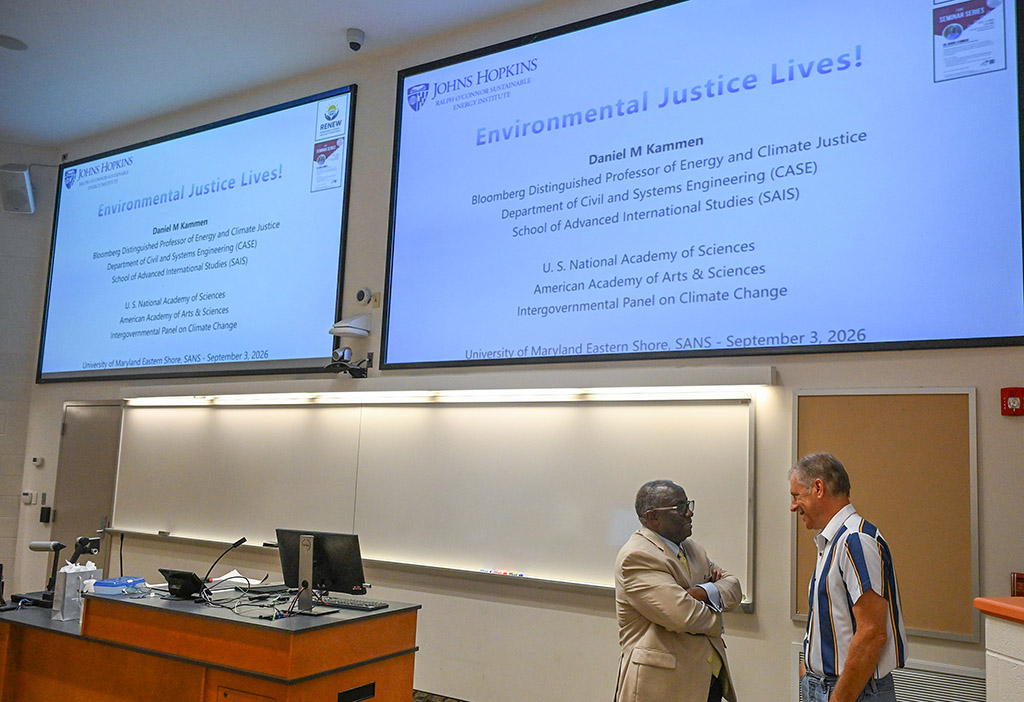
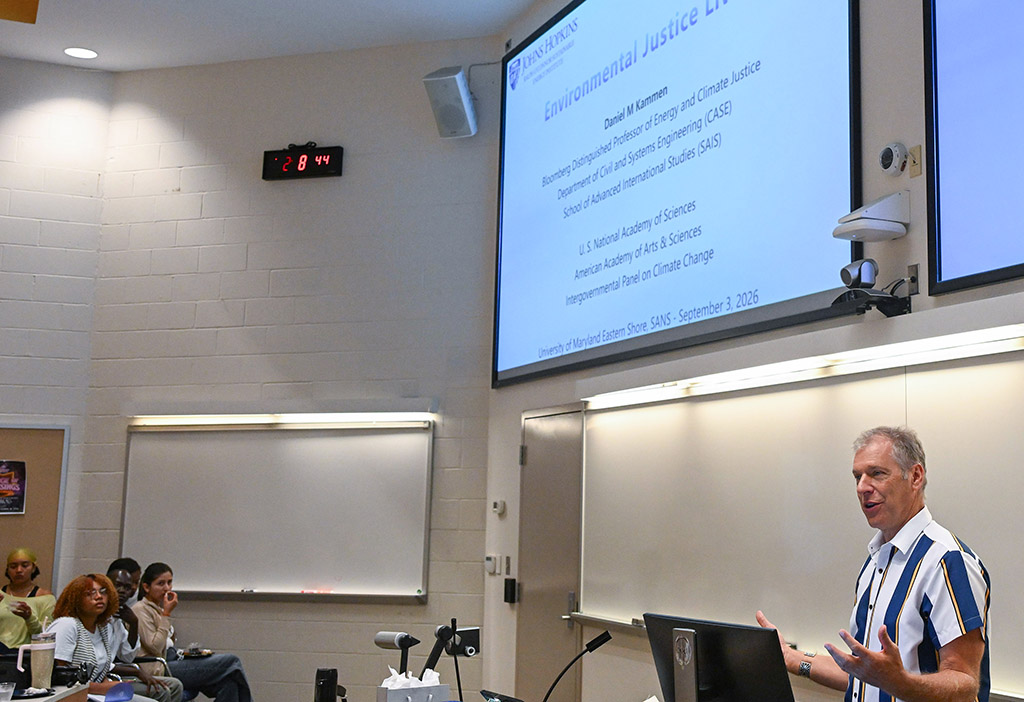
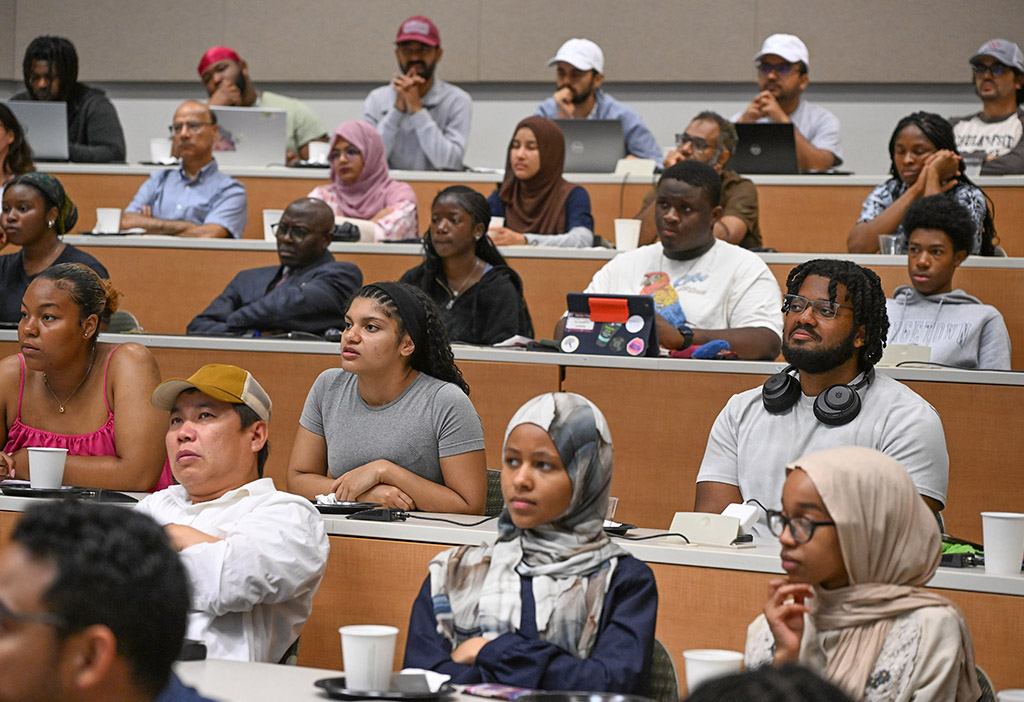
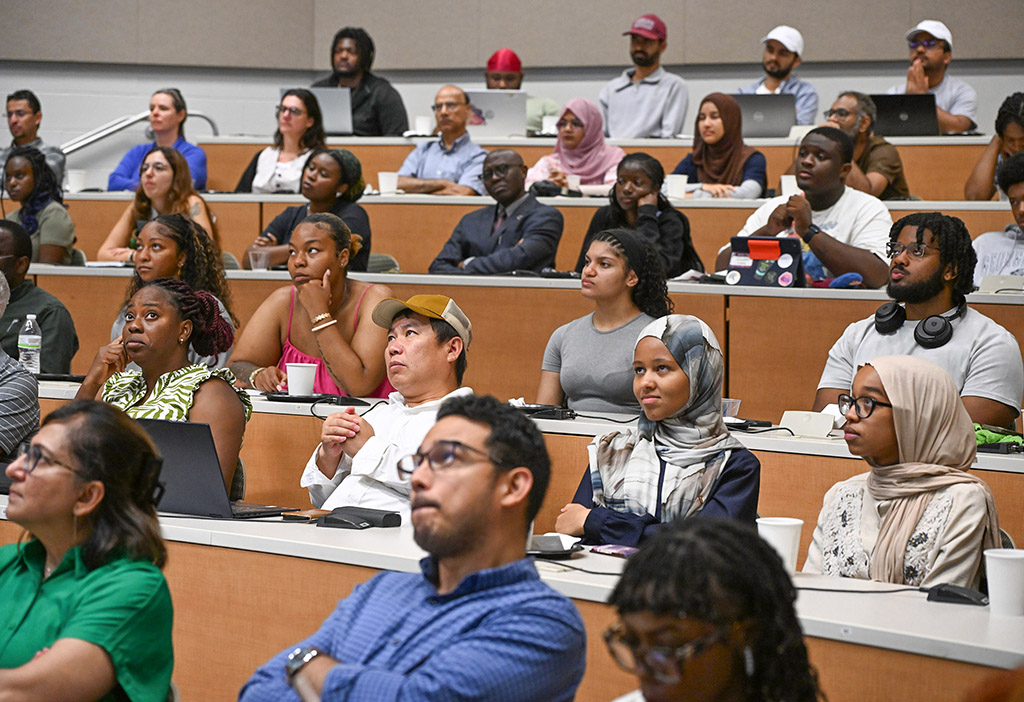
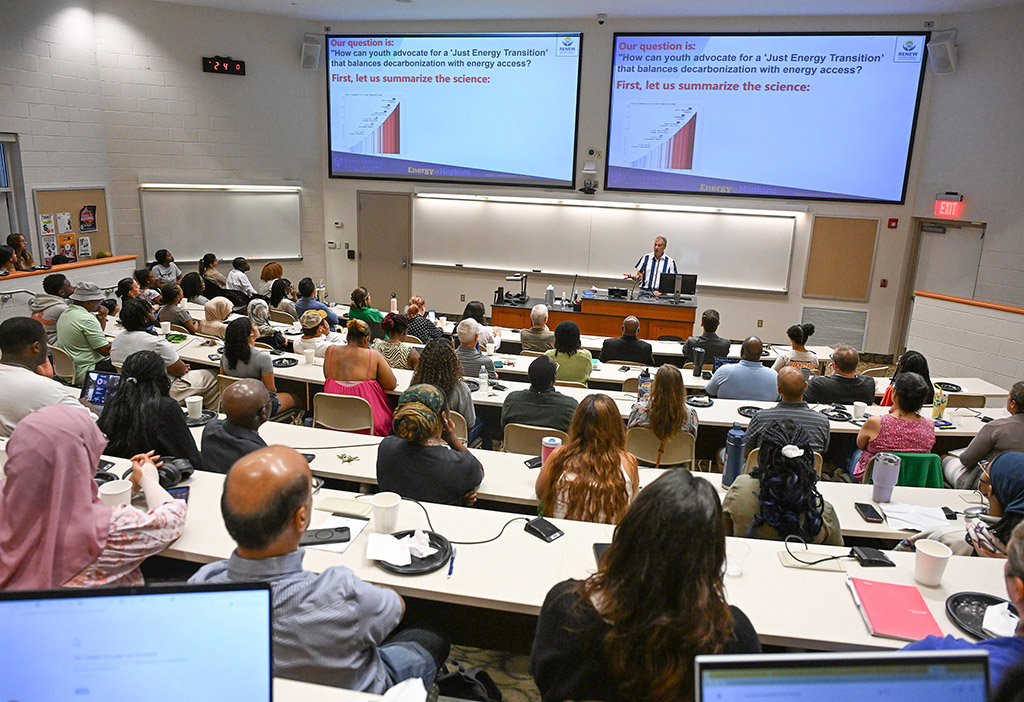
Renewable energy expert kicks off Fall Seminar Series
Past Seminars
| Date | Speaker | Topic |
|---|---|---|
| Sept. 3, 2026 | Dr. Daniel Kammen, Johns Hopkins University | Environmental Justice Lives! |
| April 30, 2026 | Dr. Francisco Dini-Andreote, Penn State | The Ecology of Suppressive Soils: Innovations for Sustainable Agriculture. |
| April 9, 2026 | Tony Pipa, Brookings Institution | Reimagining Rural: A Blueprint for Keeping Rural Communities Vital. |
| Feb. 19 , 2026 | Dr. Inty Omar Hernandez de Lira, University of Maryland Eastern Shore | From Wild Relatives to the Farm: Breeding Disease-Resistant Tomatoes. |
| March 5, 2026 | Dr. Eloisa Vendemiatti, West Virginia State University | Type-IV Trichomes and Acylsugars: Translating Natural Defense into Breeding Tools. |
SANS Seminars 2025
| Date | Speaker | Topic |
|---|---|---|
| Nov. 20, 2025 | Dr. Rimnoma Serge Ouedraogo, Penn State University | Global Crop Health Challenges: Bridging Innovation, Research, and Sustainable Solutions for Food Security. |
| Nov. 13, 2025 | Edward Goodman, horticulturist and owner of Goodman LLC. | A Career Rooted in Sustainability: My Journey in Horticulture. |
| Nov. 6, 2025 | Dr. Daniel Rodriguez Leal, University of Maryland, College Park | Next-gen Trait Improvement: Engineering Quantitative Traits Using Genome Editing. |
| Oct. 30, 2025 | Dr. Million Tadege, Oklahoma State University | Molecular insight into the control of leaf blade development in legumes. |
| Oct. 16, 2025 | Dr. Maureen Lehto Brewster, University of Maryland Eastern Shore | Following Fascist Aesthetics With(in) ‘Conservative Girl Makeup’ on TikTok. |
| Oct. 9, 2025 | Dr. Katrina Pagenkopp Lohan, Coastal Disease Ecology Laboratory, Smithsonian Environmental Research Center | Drivers Altering Host-Parasite Interactions in Coastal Ecosystems. |
| April 29, 2025 | Dr. Carolyn Brooks, UMES Faculty Member Emerita and former dean of School of Agricultural and Natural Sciences | 135 Years of the Second Morrill Act: Shaping Land-grant Universities and HBCUs. |
| April 15, 2025 | Dr. Aleaya Bowie, University of Maryland, College Park | From Student to Veterinarian: The Power of Mentorship, Networking and Keeping an Open Mind. |
| April 10, 2025 | Dr. Ayobami Ogunmolasuyi, Bain & Co. | Navigating Success: From UMES to the Ivy League and Beyond into Consulting. |
| March 13, 2025 | Dr. Michelle Spencer, University of Maryland Eastern Shore | Adult Learning Theory and the Non-traditional Student. |
| March 6, 2025 | Terrence Frett, Lead Plant Breeder, Wish Farms of Florida | Berry, Berry Tasty! Breeding berries and small fruit for Improved flavor and disease resistance. |
| Feb. 27, 2025 | Dr. Suprakash Sinha Ray, Centre for Nanostructures and Advanced Materials, Council for Scientific and Industrial Research, Pretoria, South Africa | PLA-based Bioplastics for a Circular Plastic Economy: Advantages and Challenges. |
| Feb. 13, 2025 | Dr. Dia-Eldin A. Elnaiem, University of Maryland Eastern Shore | Moon Talk: The Impact of Lunar Cycle on the Nocturnal Activity Rhythm of an Insect Vector of a Killing Disease. |
SANS seminars 2024
| Date | Speaker | Topic |
|---|---|---|
| Nov. 14, 2024 | Dr. Salem Al Mosleh, University of Maryland Eastern Shore | Getting in Shape: From Beaks to Batteries |
| Oct. 24, 2024 | Dr. Samira Musah, Duke University | Uncovering Human Disease Mysteries with Stem Cell and Organ Chip Models |
| Oct. 17, 2024 | Dr. Indranath Chaudhuri, St. Xavier’s College, Kolkata, India | Pattern Formation in Nature |
| Oct. 10, 2024 | Dr. Stephen Tomasetti, University of Maryland Eastern Shore | Shellfish Stories |
| Oct. 3, 2024 | Dr. Yvon Woappi, Columbia University | Developing High-Throughput Wound Organoids for Human-relevant Injury Modeling |
| Sept. 12, 2024 | Dr. Anil N. Netravali, Cornell University | Advanced Green Composites |
| May 9, 2024 | Dr. Jonica Thompson, USDA’s Animal and Plant Health Inspection Service | Common Poultry Diseases on the Eastern Shore |
| May 2, 2024 | Margaret “Marnie” Pepper, USDA APHIS | Understanding and Managing Wildlife Conflicts |
| April 11, 2024 | Margaret Zeigler, Inter-American Institute for Cooperation on Agriculture | Feeding the Americas and the World: Bridges for Agricultural Cooperation |
| Feb. 15, 2024 | Dr. Habilou Ouro-Koura, Pacific Northwest National Laboratory | From Student Lab to National Research Lab |
| Feb. 22, 2024 | Dr. Aaron Persad, UMES Engineering Dept. | Space Food to Space Suit |
| Mar. 7, 2024 | Dr. Birendra Adhikari, Idaho National Laboratory | Membrane Separation: Technology Needed to Reach Net-Zero |
| Mar. 14, 2024 | Dr. Naveen Dixit, UMES SANS | UMES Horticulture: Advancements in Teaching, Research and Extension |
SANS seminars 2023
| Date | Speaker | Topic |
|---|---|---|
| March 15, 2023 | Dr. Deborah Sauder | First Measurement of Ambient Air Quality on the Rural Lower Eastern Shore |
| April 5, 2023 | Dr. Jimmy W. Smith | Opportunities and Challenges in International Agriculture Development |
| April 19, 2023 | Dr. Charles R. Powley | Challenges in the Analysis of PFAS in the Environment |
| April 27, 2023 | Dr. L. Mahadevan | Magic, Mystery, and Mathematics in the Mundane |
| Sept. 13, 2023 | Dr. Richard Kane | Exploring the Synthesis and Energy Storage Applications of Graphene |
| Sept. 20, 2023 | Dr. Catherine A. Richter | Molecular biology in environmental science: Discovery of de novo thiaminase synthesis in fish, and defining the range of a rare and cryptic fish with environmental DNA |
| Sept. 27, 2023 | Dr. Kausiksankar Das, SANS, UMES | Technology in the classroom (virtual reality and cellphone) |
| Oct. 11, 2023 | Ray Baughman, University of Texas at Dallas | Give it a twist: How artificial muscles harvest mechanical energy |
| Oct. 25, 2023 | Dr. Malinda Cecil, UMES | A Food Culture Tour of the Republic of Ireland and the Challenges of Food Sustainability |
| Nov. 8, 2023 | Trevor Michaels, USDA’s Animal and Plant Health Inspection Service | How conservation detection dogs are used for wildlife management |
| Nov. 29, 2023 | Dr. Melissa A. Cregger, Oak Ridge National Laboratory | How harnessing plant-microbe interactions builds sustainable ecosystems. |
| Dec. 6, 2023 | Dr. Carrie A.M. Laboski, USDA-ARS Pasture Systems and Watershed Management Research Unit in University Park, PA. | Sustainable Nitrogen Fertilizer Rate Decisions Tools for Corn Production: A Midwestern Approach |
This institution is an equal opportunity provider
If you require a reasonable accommodation, contact ADA@umes.edu.
