

Fire extinguishers are a critical first line of defense against small, incipient-stage fires when they are properly selected, readily accessible, inspected, maintained, and used by trained individuals. Selecting the correct extinguisher for the specific fire hazard, understanding its limitations, and ensuring it remains in serviceable condition are essential for protecting people, property, and research activities while supporting compliance with applicable fire safety regulations. The infographics below provides an overview of fire extinguisher classifications, appropriate applications, and key safety considerations for campus personnel to promote proper fire extinguisher selection, placement, inspection, maintenance, and user awareness to help maintain a safe learning and working environment.
If you believe your workspace does not have an appropriate fire extinguisher, or requires additional coverage, please contact the EHS office for assistance.
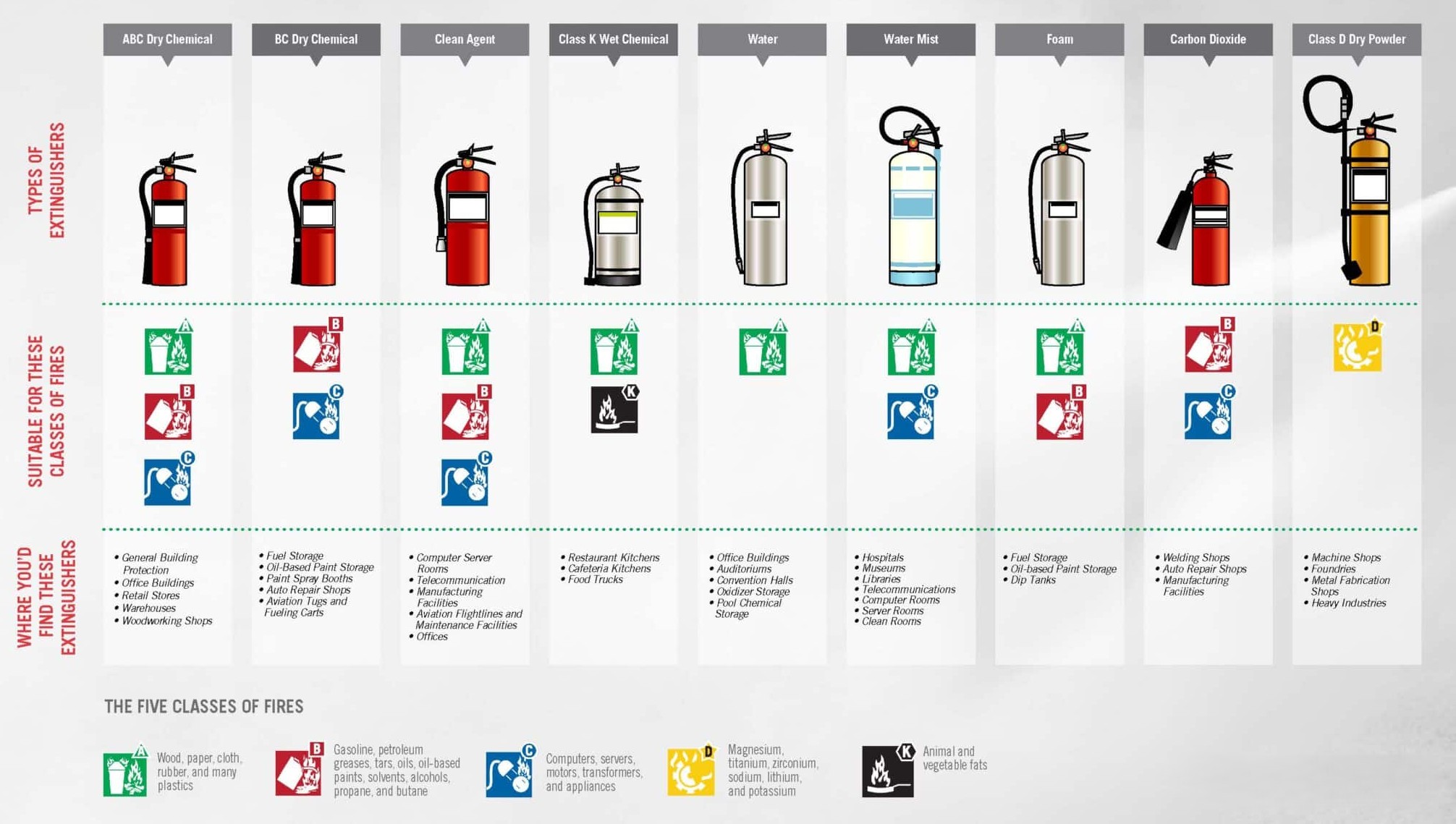
Note: Emerging Fire Classification: ISO 3941:2026 introduced Class L for lithium ion-battery fires. While this classification has not yet been adopted by OSHA or NFPA it recognizes the unique hazards associated with lithium-ion battery thermal runaway and may influence future fire protection practices. Unlike conventional fires, lithium-ion battery fires involve electrochemical reactions that can generate significant heat, release flammable and toxic gases, and reignite after appearing to be extinguished. As a result, conventional extinguishing agents may not always provide effective suppression or prevent re-ignition.
