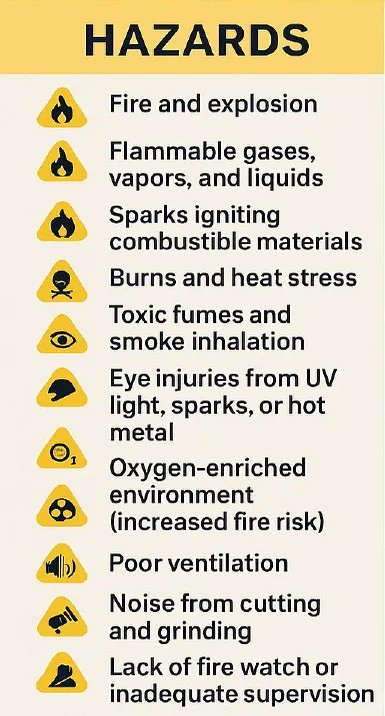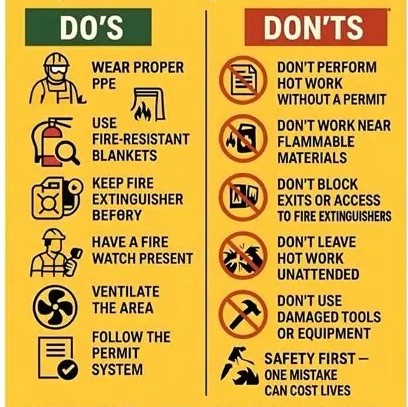

Environmental Health and Safety (EHS) provides this guidance to assist University personnel in recognizing and controlling hazards associated with hot work activities conducted on University property. This guidance applies to employees, supervisors, and other personnel who perform, oversee, or may be affected by hot work operations. Personnel conducting hot work activities must understand associated hazards, follow established safety procedures, obtain required approvals or permits, and implement appropriate controls to prevent fires, explosions, and injuries.
Hot work includes activities that generate heat, sparks, flames, or other ignition sources capable of igniting combustible materials or flammable atmospheres. Examples of hot work activities may include welding, cutting, brazing, soldering, grinding, torch-applied roofing, and other operations that produce an open flame or significant heat. Hazards associated with hot work may include fire, explosions, burns, exposure to welding fumes, eye injuries from sparks or ultraviolet radiation, and ignition of combustible materials within the surrounding area.
Hot work activities must be performed by qualified and authorized personnel who understand the hazards associated with the work and follow applicable safety requirements. Prior to beginning hot work, personnel must evaluate the work area, remove or protect combustible materials, verify appropriate fire prevention measures are in place, and use required personal protective equipment (PPE). A Hot Work Permit must be obtained from EHS before conducting hot work activities unless the work is performed in an established designated hot work area approved by the University. Additional controls, such as fire watches, area monitoring, ventilation, and post-work inspections, may be required depending on the location and conditions of the work.
EHS provides guidance, consultation, and support to help University personnel identify hot work hazards, evaluate work areas, issue hot work permits, and implement appropriate safety controls. Employees who observe unsafe hot work activities, fire hazards, or other safety concerns should contact EHS or appropriate University personnel.