
Electronic waste (e-waste) includes discarded electrical and electronic equipment that is no longer needed, functional, or suitable for use. Many electronic devices contain materials that can be recycled or require special handling due to the presence of hazardous components, including batteries, circuit boards, mercury-containing devices, and other regulated materials. Improper disposal of electronic waste can pose environmental risks and may violate federal, state, or local disposal requirements.
Environmental Health and Safety (EHS) provides guidance on the proper management and disposal of electronic waste generated through University operations. Departments are responsible for ensuring electronic waste is managed through approved University procedures and should not dispose of electronic devices in regular trash or recycling containers unless specifically authorized.
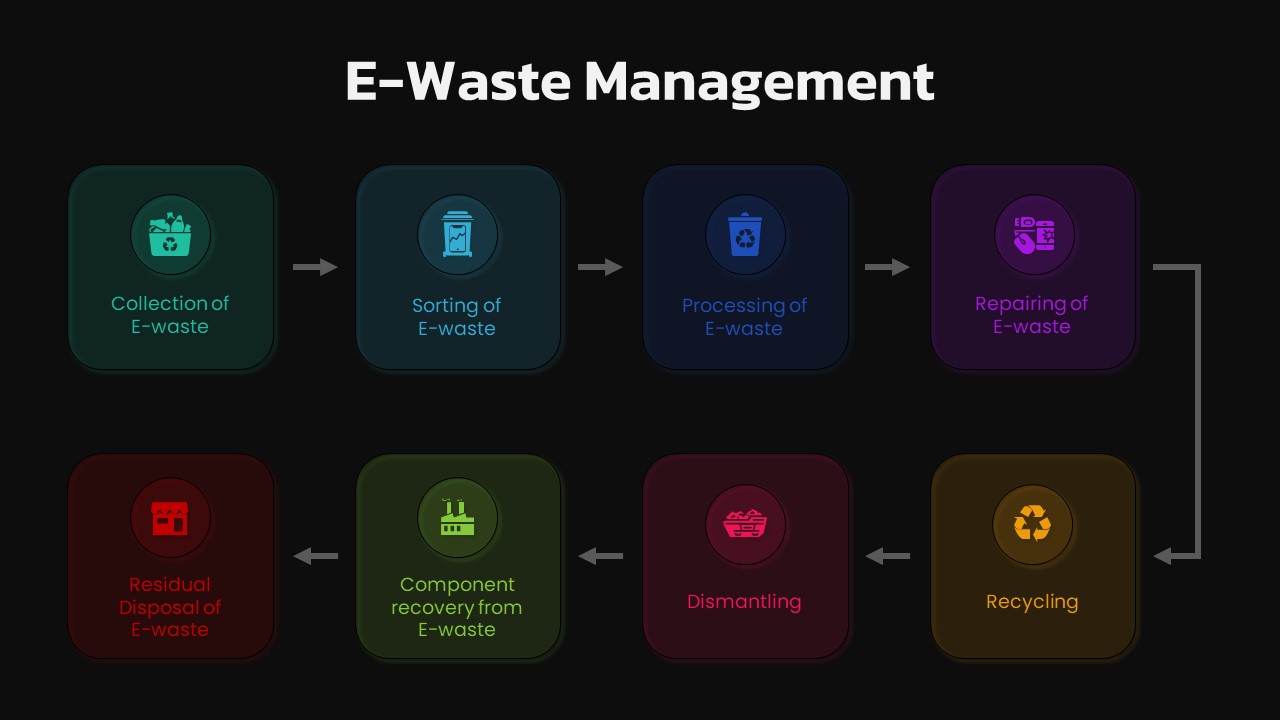
The infographic below provides a general overview of the electronic waste management cycle, from collection and sorting through recycling, component recovery, and final disposal. While the exact process may vary depending on the type and condition of the equipment, the objective is to maximize reuse and recycling while ensuring environmentally responsible disposal of materials that cannot be recovered. For additional information refer to the waste management plan.