

Falls remain one of the leading causes of serious workplace injuries and fatalities, making fall protection one of OSHA’s most frequently cited standards year after year. Many of these incidents involve improper ladder use, inadequate fall protection, or failure to recognize hazards before work begins. Whether performing maintenance, construction, inspections, or routine tasks at elevation, employees must understand when fall protection is required and how to use ladders safely. At UMES, preventing falls starts with planning the work, selecting the right equipment, inspecting it before use, and following safe work practices. This page provides guidance on fall protection requirements, ladder safety, and best practices to help employees reduce the risk of falls and work safely at height.
EHS provides guidance, training, and resources to help University employees recognize fall hazards, understand their responsibilities, and safely perform work at elevated locations. Training is provided to employees whose assigned job duties require work at heights greater than six (6) feet where fall hazards may be present. The training provides awareness of fall hazards and outlines required fall prevention, fall protection, and ladder safety practices to reduce the risk of injury. Supervisors are responsible for ensuring employees complete the required training before performing work involving fall hazards and for maintaining applicable training records.
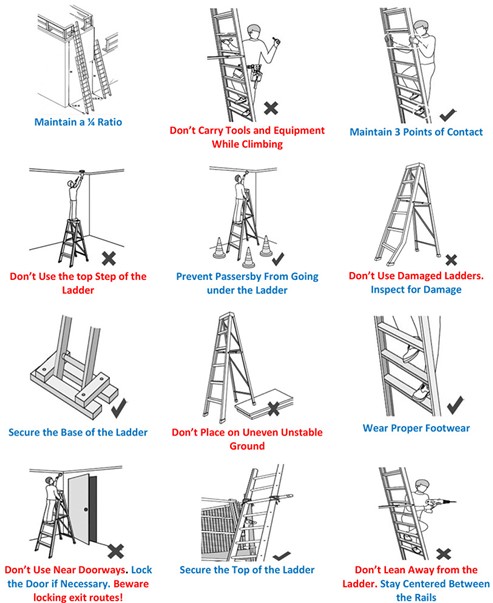
Ladder Safety Best Practices
- Select the correct ladder (i.e. Fiberglass for electricity)
- Inspect before each use. (are lock bars locked, safety feet anchored properly, etc).
- Maintain three points of contact.
- Face the ladder while climbing.
- Keep your body centered between the side rails.
- Do not stand on the top step or top cap.
- Set extension ladders using the 1:4 rule and at 75-degree angle
- Extend at least 3 feet above the landing.
- Remove damaged ladders from service.
- Wear proper footwear
- Prevent passerby from going under the ladder
- Secure the base of the ladder, don’t place on uneven or unstable ground
Fall Protection Best Practices
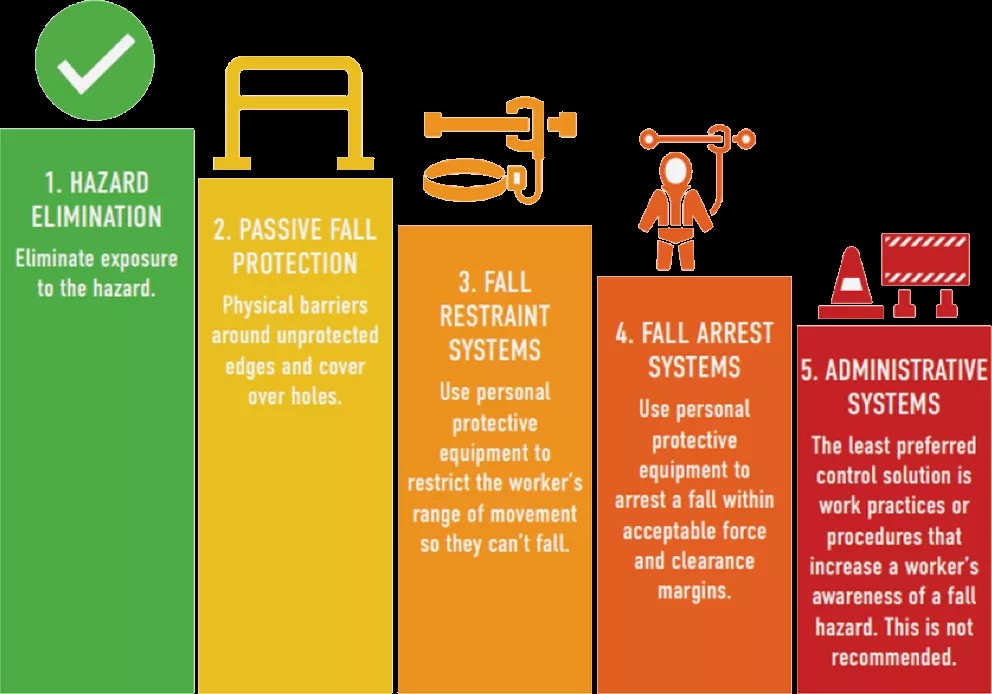
- Plan work before starting.
- Use guardrails whenever feasible.
- Wear a properly fitted full-body harness when required.
- Inspect harnesses, lanyards, and connectors before use.
- Tie off only to approved anchorages.
- Maintain 100% tie-off when required.
- Protect equipment from damage and remove defective equipment from service.
Employees should report damaged ladders, defective fall protection equipment, or other equipment issues to their supervisor. Missing guardrails, unprotected edges, unsafe elevated work areas, or other fall hazards should be reported to EHS. Workplace incidents, near misses, and safety concerns should also be reported to EHS. If an incident results in a workplace injury or illness, it must also be reported to Human Resources (HR) in accordance with university requirements.
