Maryland’s First In-State
School of Veterinary Medicine
Dedicated to providing high-quality veterinary training, advancing research, and serving communities – particularly those in underserved and rural areas.
DVM Program
Graduating Class
School in the US
Inaugural Class
The University of Maryland Eastern Shore is advancing the development of its new School of Veterinary Medicine that reflects the university’s mission of learning, discovery, and engagement and its longstanding responsibilities as Maryland’s historically Black 1890 Land-Grant institution. Currently seeking accreditation through the American Veterinary Medical Association Council on Education, the proposed school will be the first of its kind in Maryland and among the first school of veterinary medicine at the nation’s public historically Black colleges and universities.
The proposed Doctor of Veterinary Medicine program is being designed to prepare highly skilled, practice-ready veterinarians who can meet the evolving animal health, public health, agricultural, and biomedical needs of Maryland, the Mid-Atlantic region, and the nation. Through excellence in education, research, clinical training, service, and community engagement, the School will advance animal health, public health, food safety, agriculture, and environmental health through a comprehensive One Health approach. The program will also broaden pathways into the veterinary profession and prepare graduates to serve diverse communities and areas of critical need.
UMES SVM completed its comprehensive site visit from the AVMA COE June 21–26, 2026, and is awaiting the Council’s formal decision for a Letter of Reasonable Assurance. Pending approval from the accrediting body, UMES SVM will begin admitting students and build upon the university’s strong legacy of excellence in education, research, and service. The school’s establishment will further strengthen UMES’ leadership among the nation’s nineteen 1890 Land-Grant institutions, expand access to veterinary education, help address critical workforce needs, and contribute to greater diversity within the veterinary profession.
Innovative Veterinary Education
UMES is reimagining veterinary medical education through a unique, year-round accelerated DVM program designed to connect scientific knowledge with clinical application from the beginning of the curriculum through to its culmination at graduation three years later.
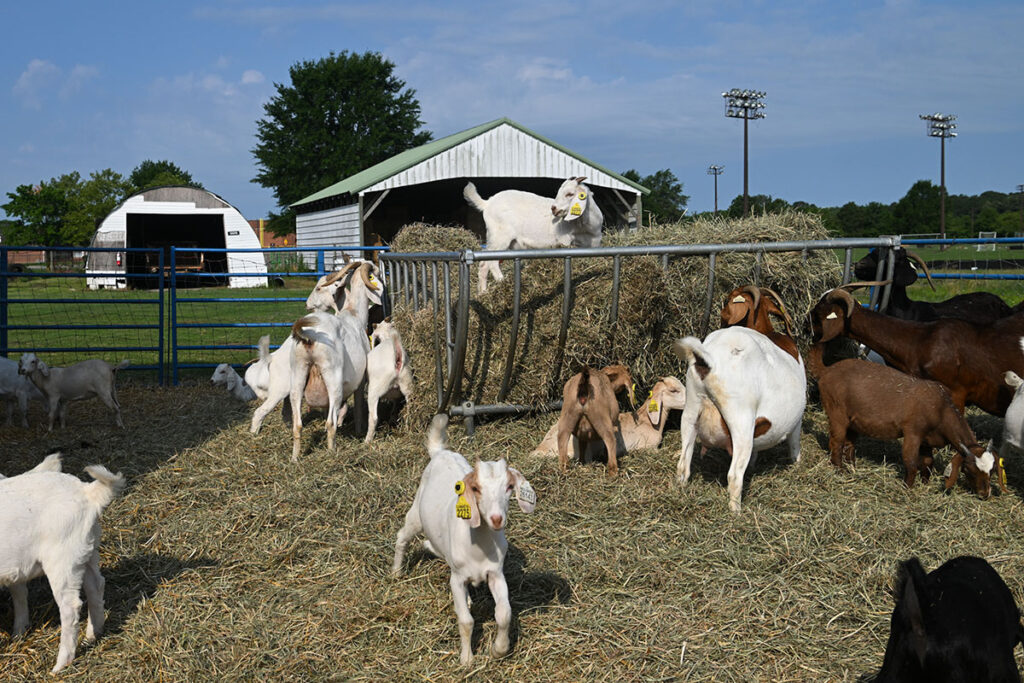
Students will learn through case-based instruction, simulation, hands-on clinical skills training, evidence-based veterinary medicine, and supervised experiences across a broad network of university-operated and/or affiliated clinical sites. This semi-distributed model will expose students to diverse patients, practice settings, communities, and career pathways while maintaining consistent academic standards and faculty oversight.
Grounded in One Health, the curriculum will prepare students to address the interconnected needs of animal health, human health, agriculture, food safety, public health, and the environment. This will result in the graduation of adaptable, practice-ready veterinarians equipped to serve Maryland, the Mid-Atlantic region, and the nation.
Three-Year, Year-Round Curriculum
An academically rigorous program that enables students to complete the DVM degree through continuous summer, fall, and spring instruction.
Early and Progressive Clinical Learning
Clinical reasoning, communication, technical skills, and professional responsibility are developed throughout the curriculum—not reserved for the final year.
Real-World Clinical Experiences
A semi-distributed model provides supervised learning in community practices, specialty hospitals, shelters, farms, diagnostic facilities, and other authentic veterinary settings.
Competency-Based Education
Student progress is evaluated through clearly defined competencies, clinical performance assessments, objective structured clinical examinations, and progressive entrustment in professional activities.
One Health Preparation
Students explore the connections among animal, human, agricultural, environmental, and public health.
Technology-Enhanced Learning
Simulation, digital learning platforms, clinical data, emerging technologies, and evidence-based decision-making support student learning and assessment.
Mission Statement
The mission of the SVM is to serve the diverse citizens of Maryland, the nation, and the world through excellence in veterinary education, research, and service. The SVM is committed to advancing undergraduate and professional students through high-quality instructional and clinical experiences across a wide range of domestic species, including food animals, equine, companion animals, and exotics within a One Health framework. Through rigorous academic programs, scholarly activities, and service, the SVM will prepare competent, confident, and ethical veterinary professionals and is dedicated to excellence in program delivery, consistent with UMES’ land-grant mission and commitment to improving the health and well-being of animals, people, and ecosystems.
Our Vision