
Admissions
Non-Academic Admissions Requirements
Assessing the whole person
Requirements Non-academic
Requirements How to
Apply Selection
Process Costs &
Financial Aid Family
Information Transfer
Students Contact
Admissions
Beyond Academic Excellence
Success in veterinary medicine requires more than a strong academic foundation. Veterinarians must be effective communicators, thoughtful problem-solvers, collaborative team members, and compassionate professionals who demonstrate integrity, adaptability, sound judgment, and commitment to service.
UMES uses a holistic admissions process to consider each applicant’s experiences, personal and professional attributes, perspectives, and potential for success in veterinary education and practice. These qualities are evaluated through the complete application and, when applicable, the interview process.
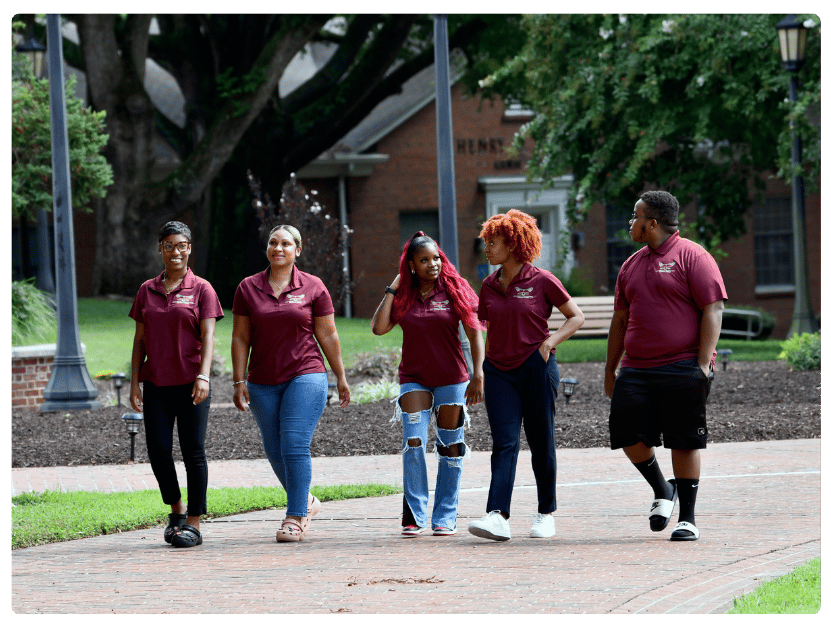
Veterinary & Animal-Related Experience
UMES SVM does not require applicants to complete a minimum number of veterinary, biological research, or animal-related experience hours. Applicants should, however, demonstrate that they have explored the veterinary profession sufficiently to make an informed decision about pursuing a veterinary career. Relevant experiences may be paid or unpaid and may include veterinary practice, animal care, agriculture, biomedical or animal-health research, public health, wildlife, sheltering, community service, or other related settings.
The Admissions Committee considers:
- The quality, depth, and relevance of the applicant’s experiences
- The applicant’s understanding of the veterinary profession
- The level of engagement, responsibility, and initiative demonstrated
- The applicant’s ability to reflect thoughtfully on what was learned
- Exposure to animal care, veterinary teams, clients, communities, or professional environments
- The relationship between these experiences and the applicant’s career goals
Applicants are evaluated in the context of the opportunities available to them. Experience involving multiple species or veterinary practice settings is valued but is not required.
Personal Attributes & Competencies
The Admissions Committee evaluates personal attributes assessed through essays, personal statements, and structured interviews.
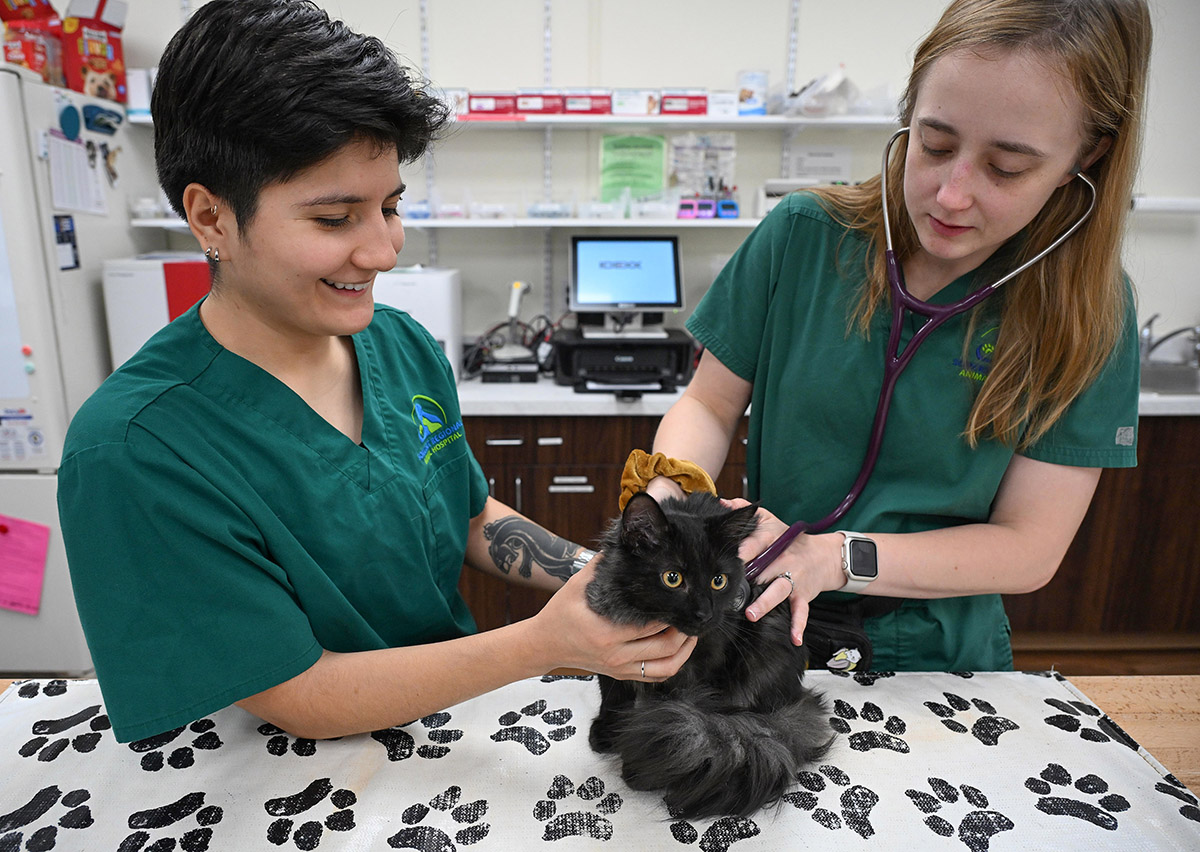
Life Experiences
Consideration is given to leadership, service, employment, and experience that demonstrate perseverance, cultural awareness, and ability to serve diverse communities.
As part of the UMES SVM supplemental application, applicants will respond to five experience-based questions. These responses provide an opportunity to describe meaningful employment, veterinary or animal-related experience, research, service, community engagement, and leadership. At least one response must address an experience that contributed to the applicant’s understanding of the veterinary profession. Specific prompts and word limits will be provided in the application.
Essays should:
- Emphasize leadership, teamwork, resilience, and perseverance
- Provide evidence of cultural awareness and community service
- Demonstrate communication skills
- Document how each experience informs the applicant’s future career as a veterinarian
Personal Statement
Applicants must complete the personal statement, which should clearly explain the applicant’s motivation for pursuing veterinary medicine and demonstrate thoughtful reflection, effective communication, and an informed understanding of the profession.
The Admissions Committee considers:
- Whether the applicant directly answer the question
- Relevant professional information shared
- Evidence of reflection, growth, persistence, or preparation for the demands of veterinary medical education
- Logical flow and quality of writing

Letters of Recommendation
Applicants must submit a minimum of three letters of recommendation. One letter must be written by a licensed veterinarian who can address the applicant’s understanding of the profession and preparation for veterinary education. Applicants may submit up to six letters, all of which may be considered by the Admissions Committee.
Letters from immediate family members or personal friends will not be accepted. Applicants must waive their right to access letters submitted for consideration.
Letters should come from individuals who know the applicant well and can provide specific examples of the applicant’s academic preparation, professionalism, communication skills, reliability, service, leadership, or veterinary-related experience. Of particular interest for a reference to address would be their assessment of how well an applicant may be able to handle the rigors of an accelerated program.
UMES SVM Supplemental Application
The supplemental application allows the Admissions Committee to better understand each applicant’s preparation, experiences, judgment, communication skills, and professional goals. Responses are evaluated globally, rather than against a single preferred viewpoint. Applicants should answer each question authentically, thoughtfully, and completely.
An application will not be considered complete or eligible for review until the required supplemental application has been submitted.
Technical Standards
Applicants and enrolled DVM students must be able to perform minimal essential functions and technical standards in the following categories with or without reasonable accommodation:
UMES SVM does not discriminate based on disability. Applicants requiring accommodations should contact UMES Access and Accommodation Services (AAS) and notify the Assistant Dean for Student Affairs. Accommodations cannot inherently alter the integrity of the curriculum or exclude elements deemed essential to veterinary training.
UMES SVM is committed to educating and training outstanding veterinary clinicians and scientists who will promote and protect animal and public health within their local, state, regional, and national communities. Graduates of the DVM program will be fully prepared to practice independently in all entry-level positions within the veterinary profession upon graduation.
The AVMA COE requires graduating students to attain the following nine competencies:
- 1Comprehensive patient diagnosis, appropriate use of clinical laboratory testing, and record management
- 2Comprehensive treatment planning, including patient referral when indicated
- 3Anesthesia and pain management, patient welfare
- 4Basic surgery skills, experience, and case management
- 5Basic medicine skills, experience, and case management
- 6Emergency and intensive care case management
- 7Health promotion, disease prevention/biosecurity, zoonosis, and food safety
- 8Client communications and ethical conduct
- 9Critical analysis of new information and research findings relevant to veterinary medicine
These competencies are taught through a 2-year pre-clinical and a 1-year clinical curriculum, involving direct patient care and communication with clients, colleagues, and veterinary professionals.
Achieving the Essential Functions and Technical Standards
The UMES School of Veterinary Medicine is committed to providing qualified applicants and students with disabilities equal access to its Doctor of Veterinary Medicine program.
The DVM curriculum includes intensive academic instruction, laboratory and clinical-skills education, direct animal and patient care, client communication, and supervised clinical experiences in a variety of settings. Applicants and enrolled students must be able to perform the program’s essential functions, with or without reasonable accommodation.
UMES evaluates requests for accommodation individually through an interactive process coordinated by Access and Accommodation Services (make sure to provide an appropriately accessible hyperlink here). Reasonable accommodations, auxiliary aids, assistive technologies, and alternative methods may be used when they provide effective access without fundamentally altering an essential academic or clinical requirement or compromising patient, student, personnel, or public safety.
Applicants and students are encouraged to contact Access and Accommodation Services (provide hyperlink here) to discuss potential accommodations. Disclosure of a disability is voluntary and is handled in accordance with applicable university policies and law.
Select a standard below to view the full details and essential functions:
Observation Skills Standard +
Candidates must be able to actively engage in acquiring information from in-person, direct observation in all aspects of both the pre-clinical and clinical coursework. Candidates should be able to assess a patient and evaluate findings accurately, detect changes in patient behavior, physical and mental status to provide appropriate veterinary care.
Essential functions include, but are not limited to:
- Observing gross and microscopic anatomic and pathological specimens
- Recognizing signs of distress, fear, aggression, or other potentially dangerous behaviors made by a variety of species at a distance and in close proximity
- Distinguishing the origin of sound from multiple patients in an area and responding to warning sounds within laboratory, animal shelter, and clinical environments
- Performing a physical exam including assessing physical appearance and obtaining vital information through palpation, auscultation, and manipulation
- Interpreting graphical images and videos such as radiographs and ultrasounds and physiological recordings via digital or analog mechanisms
Communication Skills Standard +
Candidates should be able to communicate with clients and all members of the health care team, to establish effective professional relationships in order to elicit and provide information. Students should be able to communicate effectively and sensitively, both in person and in writing.
Essential functions include, but are not limited to:
- Communicating effectively using verbal, nonverbal, and written methods in a variety of environments including busy veterinary clinics, farms, feedlots, specialty practices, and emergency hospitals
- Clearly articulating patient information and instructions in high-stress situations and surgical settings, including when wearing surgical masks
- Using professional written communication to accurately document patient care, provide care instructions, and share essential information with colleagues, the veterinary team, and clients
Motor Function Standard +
Candidates must possess the physical capacity to perform physical examinations, diagnostic, medical, surgical, and emergency procedures, requiring coordination of both fine and gross motor movements, balance, and equilibrium. These actions must be executed safely and efficiently within a reasonable time frame. Depending on the setting, students may use appropriate assistance, team-based methods, adaptive techniques, or equipment, provided that patient and personnel safety and the educational purpose of the activity are maintained.
Essential functions include, but are not limited to:
- Fine motor tasks: palpation of pulses and anatomical structures, performing diagnostic procedures such as fine needle biopsy, handling surgical and anatomical instruments
- Gross motor tasks: moving safely while handling patients ranging from under 1 lb. to over 1,500 lbs., standing for extended periods, restraining patients
- Safely positioning, examining, handling, and assisting with the movement of animals and equipment in laboratory, farm, shelter and clinical environments.
Intellectual, Conceptual, Integrative & Quantitative Standards +
Candidates should be able to comprehend, retain, and apply detailed and complex information and engage in problem-solving throughout the pre-clinical and clinical coursework. Candidates are expected to accurately measure, calculate, reason, analyze, synthesize, and communicate information.
Essential functions include, but are not limited to:
- Collecting, organizing, prioritizing, analyzing, and synthesizing findings from patient history, physical examination, and diagnostic data to make reasoned diagnoses and treatment decisions
- Independently and accurately measuring, estimating, and calculating medication doses in a timely manner
- Solving complex clinical scenarios promptly to ensure patient safety and high-quality care
- Retaining and recalling critical patient information when charts and reference materials are unavailable
Behavioral and Social Abilities +
Students should possess the emotional health required for full utilization of their intellectual abilities, the exercise of good judgment, the prompt completion of all responsibilities attendant to the diagnosis and care of patients, and the development of mature, sensitive, and effective relationships with clients, fellow students, faculty, staff, and the entire health care team.
Clinical education may include extended work periods, emergency responsibilities, after-hours activities, variable schedules, and on-call assignments. Students must be able to perform safely and professionally during these activities, with reasonable accommodation when applicable.
Essential functions include, but are not limited to:
- Managing a high caseload while handling the uncertainties and stressors inherent in the veterinary medical profession, including adapting to rapidly changing environments
- Exercising sound judgment in the diagnosis and care of patients for continuous periods, which may be longer than eight hours
- Contributing to a positive work and study environment by effectively giving and receiving feedback and taking personal responsibility for constructive changes
- Providing patient care after-hours and responding to on-call duties promptly with professional, respectful, and responsive conduct
Ethics and Professionalism +
Candidates should maintain and display ethical and professional behaviors commensurate with the role of a veterinarian in all their interactions with clients, patients, faculty, staff, fellow students, the entire health care team, and the public.
Essential functions include, but are not limited to:
- Maintaining professional behavior in all pre-clinical and clinical activities, official extracurricular activities, and official functions
- Understanding the legal and ethical aspects of the veterinary profession, including specific laws within the candidate’s chosen practice area
- Adhering to the professional and ethical principles and code of conduct of the AVMA
- Engaging in regular self-reflection and constructive self-assessment to identify areas for improvement and develop an action plan to enhance professional growth
All candidates who accept admission to UMES SVM must understand and accept the UMES Essential Functions and Technical Standards Policy. Admission and continued enrollment are contingent upon this acknowledgment and the ability to meet the technical standards with or without reasonable accommodations.
